Counsellor Training Course
Build counselling skills using Mr. Psyc’s structured, India-aware framework—practical, ethical, and designed for real cases.

Core Skills Lab
Listening, questioning, triage, and goal setting—practised with scripts, cases, and reflection.

Real Case Practicum
Guided practice with anxiety, mood, stress, and family cases—using Mr. Psyc-style flows.

Supervision & Feedback
Case reflection, boundaries, and referral decisions with structured feedback templates.


Why counsellor training matters
People are reaching out more than ever—but many helpers feel under-trained, unsure about protocols, and alone with difficult cases.
More need, fewer professionals
Helpers without clear roadmap
High-risk cases, low confidence
Burnout in front-line helpers
Theory-rich, practice-poor
Need for guided supervision
Built for Counsellors. Psychology students. Teachers & HR.
This is for people who support others—formally or informally—and want a practical, ethical, India-aware counselling toolkit with Mr. Psyc-style flows.


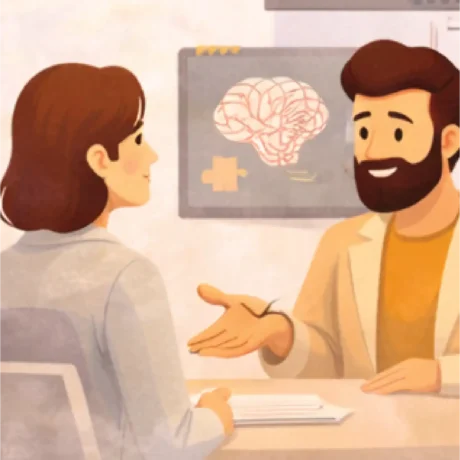


Relatable signs for future counsellors
These points help you see if you are already doing emotional support work without formal tools.
If several feel like you, a structured counsellor training can turn intuition into safe, effective practice.
People already come to you
Worried about saying the wrong thing
Unsure where your role ends
Carrying stories home with you
Want skills, not just theory
Your role is expanding
What You Learn & Receive
A complete system: concepts, scripts, worksheets, supervision tools, and optional Mr. Psyc-aligned practice support.
Counselling foundations
Micro-skills drills
Case flow templates
Mr. Psyc triage logic
Documentation & forms
Crisis & red flags
Your Training Roadmap
Instead of one long, confusing syllabus, this roadmap breaks training into realistic phases—so you always know what to focus on next.
Observe
Notice the kinds of cases and questions that repeatedly show up in your work.
Learn
Build core counselling and triage skills through structured modules and labs.
Practice
Apply skills to guided cases, role plays, and supervised scenarios.
Integrate
Blend Mr. Psyc tools into your current setting—schools, clinics, helplines, or private work.
Sustain
Use supervision, reflection tools, and refreshers to keep skills sharp over time.
Training Snapshot
Skills grow when you see, practise, and reflect. This program is built around cycles of short concepts → guided practice → supervision-style reflection.
85%
Skill confidence
Goal: feel prepared for most common cases
78%
Case handling readiness
Goal: clear next-step thinking in sessions

Orientation & basics
Skills & scripts
Supervised reflection
Case libraries
Supportive community
Mr. Psyc alignment

Flexible entry
Designed for real helpers
Practice-first approach
Ethics baked in
Clear skill milestones
Flexible commitment
Human, not robotic
Ask Mr. Psyc about your training path
No. Many participants are teachers, HR professionals, helpline volunteers, and working counsellors who want more structure. Some modules assume basic maturity and interest, not specific degrees.
No. This is a counselling and support-skills program aligned with Mr. Psyc flows, not a replacement for formal clinical psychology or psychiatry training. We clearly mark where referral to licensed professionals is needed.
Foundation track: 2–3 hours per week (videos + worksheets). Supervised training: 3–5 hours per week including live labs and reflection.
The core program is delivered online so learners from any city can join. For institutions, offline or blended formats can be discussed separately.
Yes—within the scope we define in the program (supportive counselling, psychoeducation, structured conversations). We guide you on how to communicate limits, consent, and referral clearly inside your setting.
Trusted by trainees
The goal is simple: you should feel calmer, clearer, and more prepared when someone says, “Can I talk to you for a minute?”.

I had done courses before, but this was the first time I felt I had clear flows and questions for sessions.

Neha Arora
Employees open up easily, but earlier I would panic. Now I know how to listen, document, and refer when needed.
Rahul Deshpande
The scripts, case notes, and supervision-style questions were gold. It made the textbook theory come alive.
Aisha Khan
I finally feel I am helping within my limits, not trying to be a doctor. That lowered my anxiety a lot.
Joseph Mathew