
The Confusion Most People Don’t Talk About
There is a moment in almost everyone’s life when they pause and wonder, “What exactly is wrong with me?” Not dramatically. Not loudly. Just quietly, somewhere between the late-night overthinking and the morning exhaustion. Am I anxious? Am I depressed? Am I burned out? Is this just stress? Or is this just life happening? And the scariest part? Most people have no idea which one they’re dealing with. They lump everything into a single bucket called “I don’t feel like myself,” and assume that emotional confusion is normal. But here’s the truth: Anxiety, depression, and burnout look similar on the surface—but underneath, they’re completely different conditions. And the sooner you understand which one you’re facing, the sooner you can recover. This is where mental health screening becomes a game-changer.Why These Conditions Get Mixed Up So Easily
Emotional distress doesn’t walk into your life with a name tag. It doesn’t announce, “Hello, I’m Anxiety, nice to meet you,” or “Hi, I’m Burnout, sorry for ruining your motivation.” These states blend into each other, overlap, mimic each other, and create a confusion even experts sometimes take time to differentiate without assessment. For example:- Fatigue is common in all three
- Irritability appears in all three
- Loss of motivation appears in all three
- Sleep problems appear in all three
What Anxiety Truly Looks Like (Beyond What You’ve Heard)
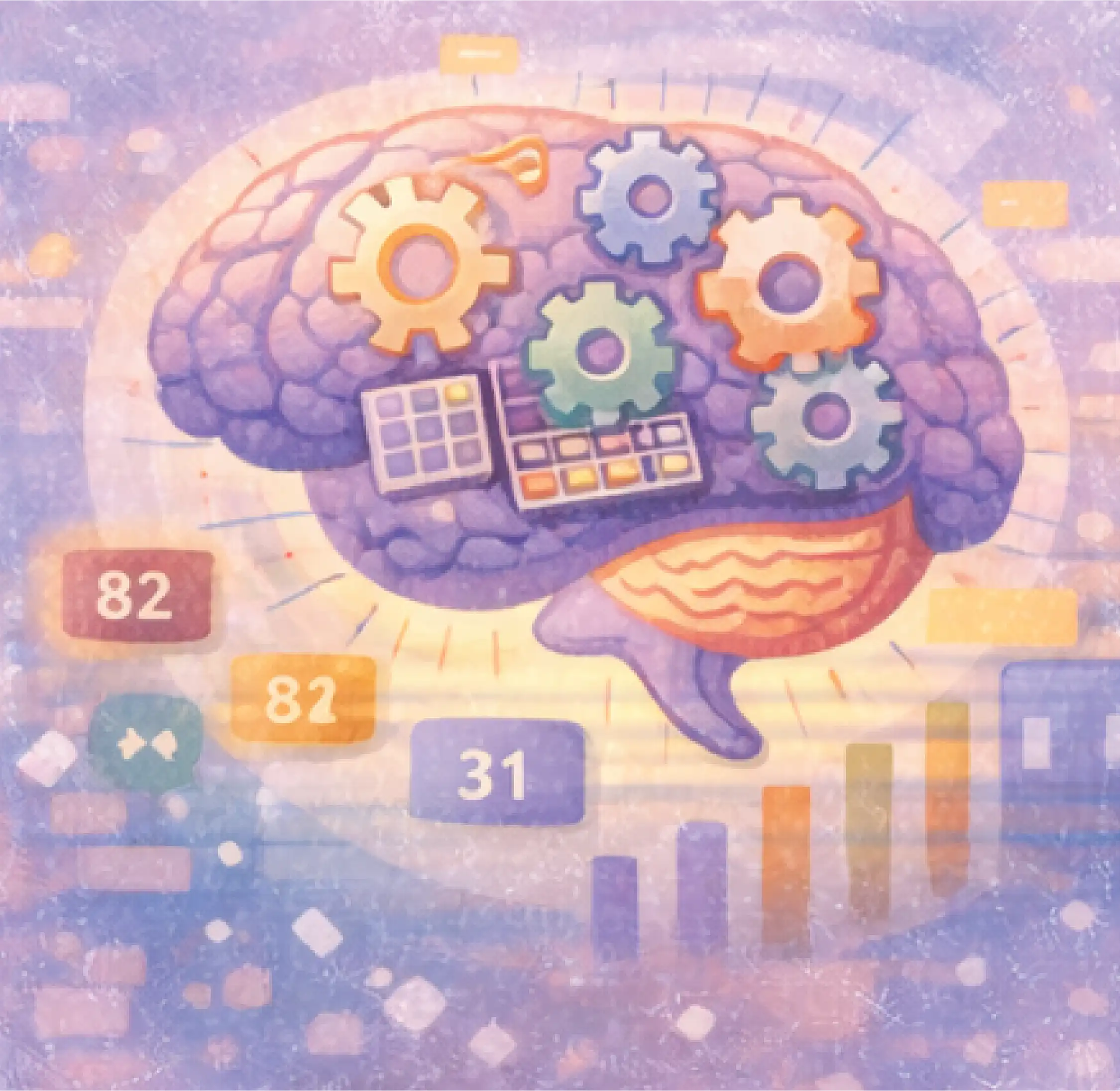
Anxiety is not “stress plus fear.” It’s an overactive alarm system inside the brain. People with anxiety often experience:- Hyper-alert thinking
- Rapid worry loops
- Difficulty relaxing
- Racing heart
- Difficulty focusing
- Over-planning
- Fear of uncertainty
- A sense of “something is wrong” without knowing what
What Depression Actually Feels Like (Not Just Sadness)
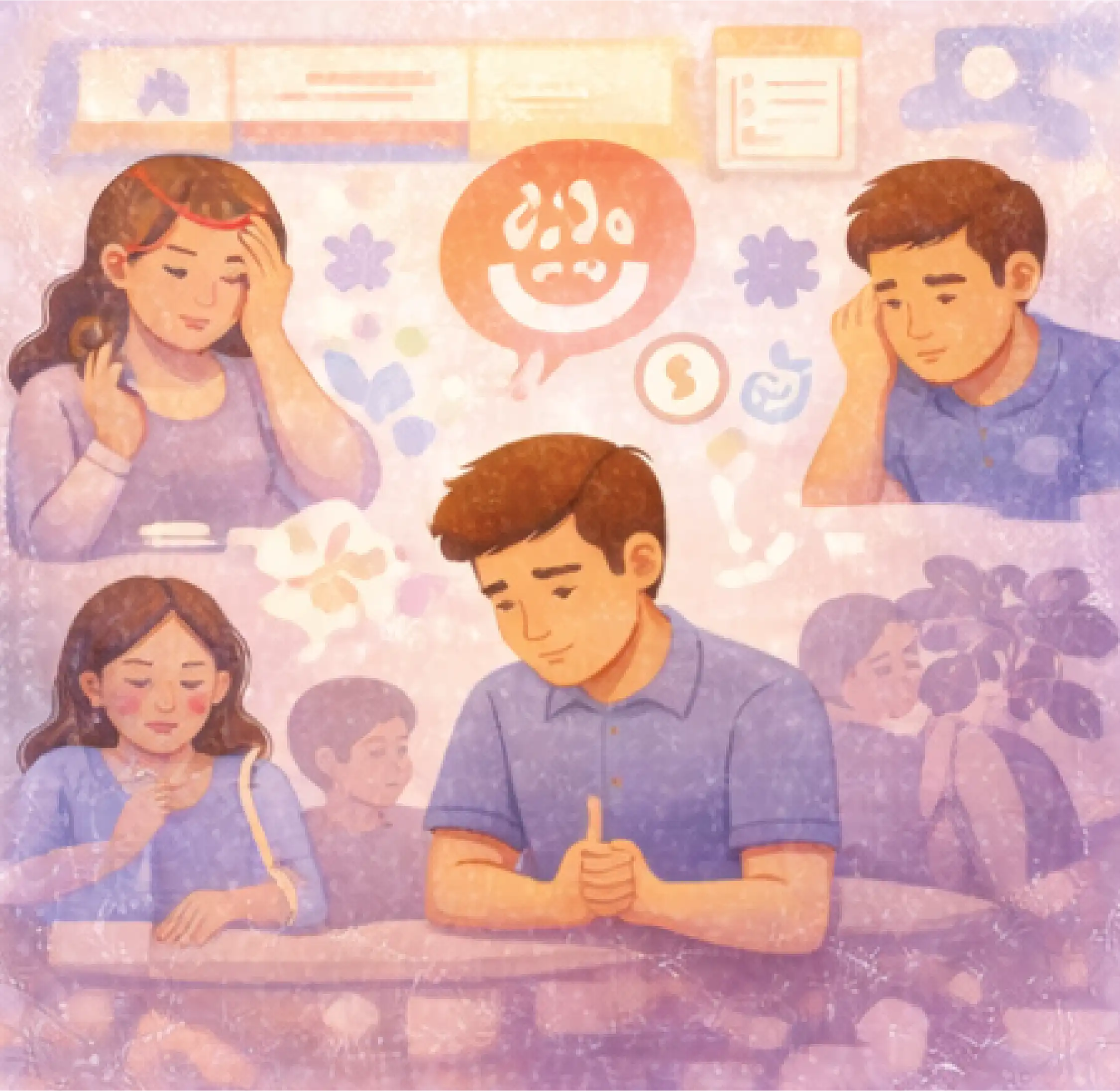
Depression is not “being sad.” It is losing the internal spark that makes life feel meaningful. People often describe it as:- A heavy mind
- Emotional numbness
- Feeling empty
- Losing interest in things
- Thinking slower
- Constant tiredness
- Feeling disconnected from joy
- Difficulty imagining the future
- Mood consistency
- Emotional flatness
- Cognitive slowdown
- Lack of pleasure
- Hopeless thinking
- Internal withdrawal
Burnout: The Condition Nobody Realises They Have
Burnout is the emotional version of running a marathon with no training, no rest, and no water—until your mind simply switches to survival mode. It happens when your brain has been “on” for too long. You may experience:- Chronic exhaustion
- Emotional disconnection
- Feeling drained in social situations
- Detachment from work
- Reduced performance
- Mentally checking out
- Feeling like you’re “on autopilot”
- Irritability for no reason
- Cognitive fatigue
- Emotional depletion
- Work-related strain
- Reduced coping ability
- Diminished recovery capacity
The Power of a Few Smart Questions: How Screening Separates the Three
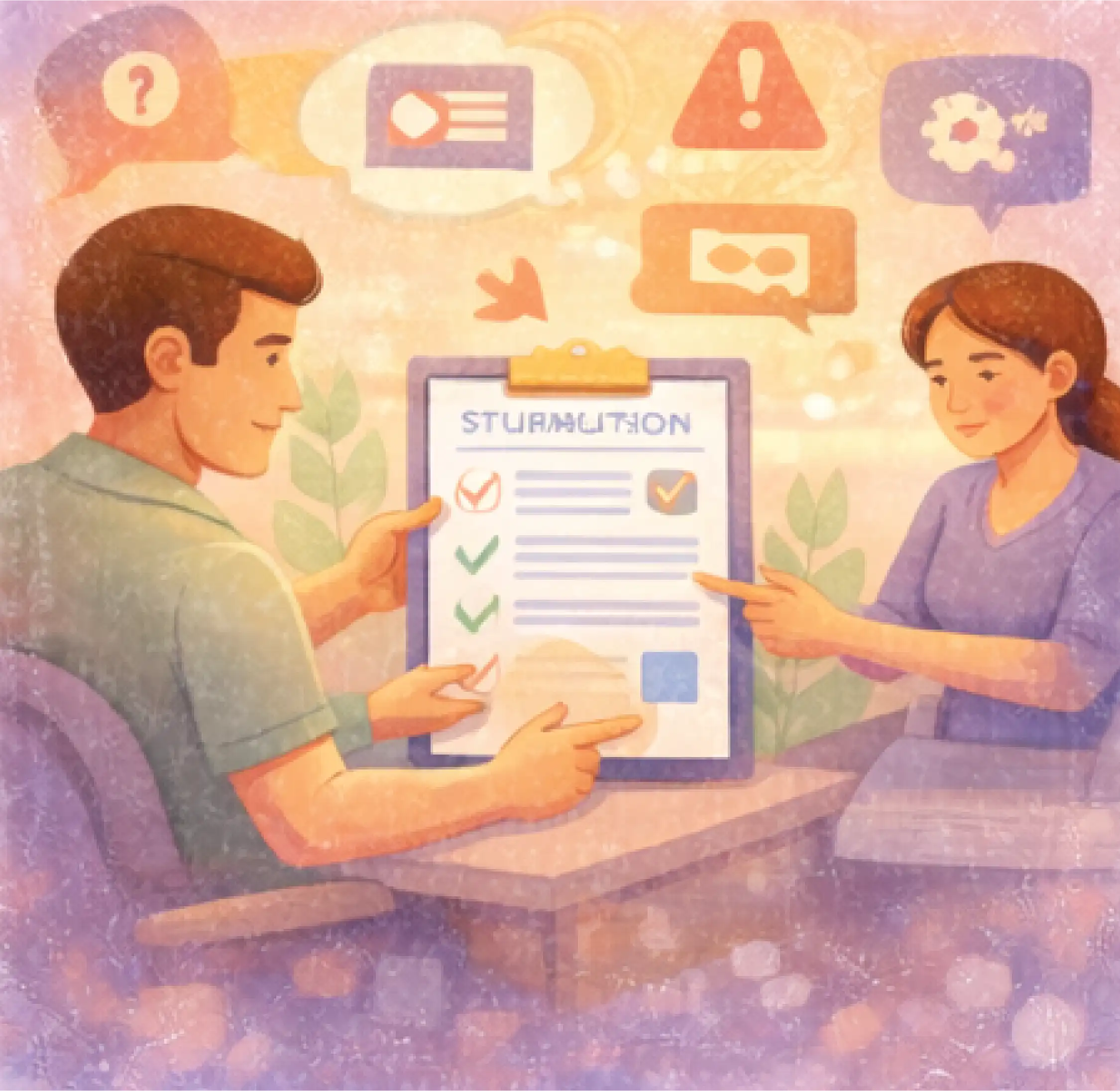
Psychometric screening works like a traffic signal for emotional states. In just 10–15 minutes, it reveals whether your emotional system is:- Overactive (Anxiety)
- Underactive (Depression)
- Overloaded (Burnout)
If your thought speed is high → Anxiety
If your emotional energy is low → Depression
If your system is exhausted → Burnout
And the best part? You don’t have to guess anymore. The screening tool does the decoding for you.Why Guessing Is Dangerous (And Screening Isn’t)
Imagine you have a headache. But instead of checking what kind it is, you randomly select a treatment.- If it’s dehydration, coffee will make it worse.
- If it’s migraine, sunlight will make it worse.
- If it’s tension-pain, ignoring rest will make it worse.
Where Screening Helps Instantly: Real-Life Scenarios
Here are a few examples where psychometric screening instantly clarifies what years of guesswork cannot. A college student says: “I can’t focus anymore.” Screening reveals cognitive overload and digital fatigue, not depression. A professional says: “I’m constantly worried; maybe I’m depressed.” Screening shows classic anxiety pattern—not depression. A tired parent says: “I’m so drained, I think I’m depressed.” Screening reveals burnout, not clinical depression. A teen says: “I feel blank and disconnected.” Screening identifies early depressive markers—not stress. In each case, clarity leads to the right support.How Mr. Psyc Turns Screening Into Actual Help
The platform doesn’t just hand you a score. It uses the screening results to build a personalised care path. Depending on your result, Mr. Psyc may recommend:- A beginner counsellor
- An intermediate counsellor
- A senior counsellor
- A psychiatrist
- A digital detox plan
- A behaviour-change routine
- A specific emotional skill-building program
- A triage for urgent intervention
- Automated nurturing for daily support