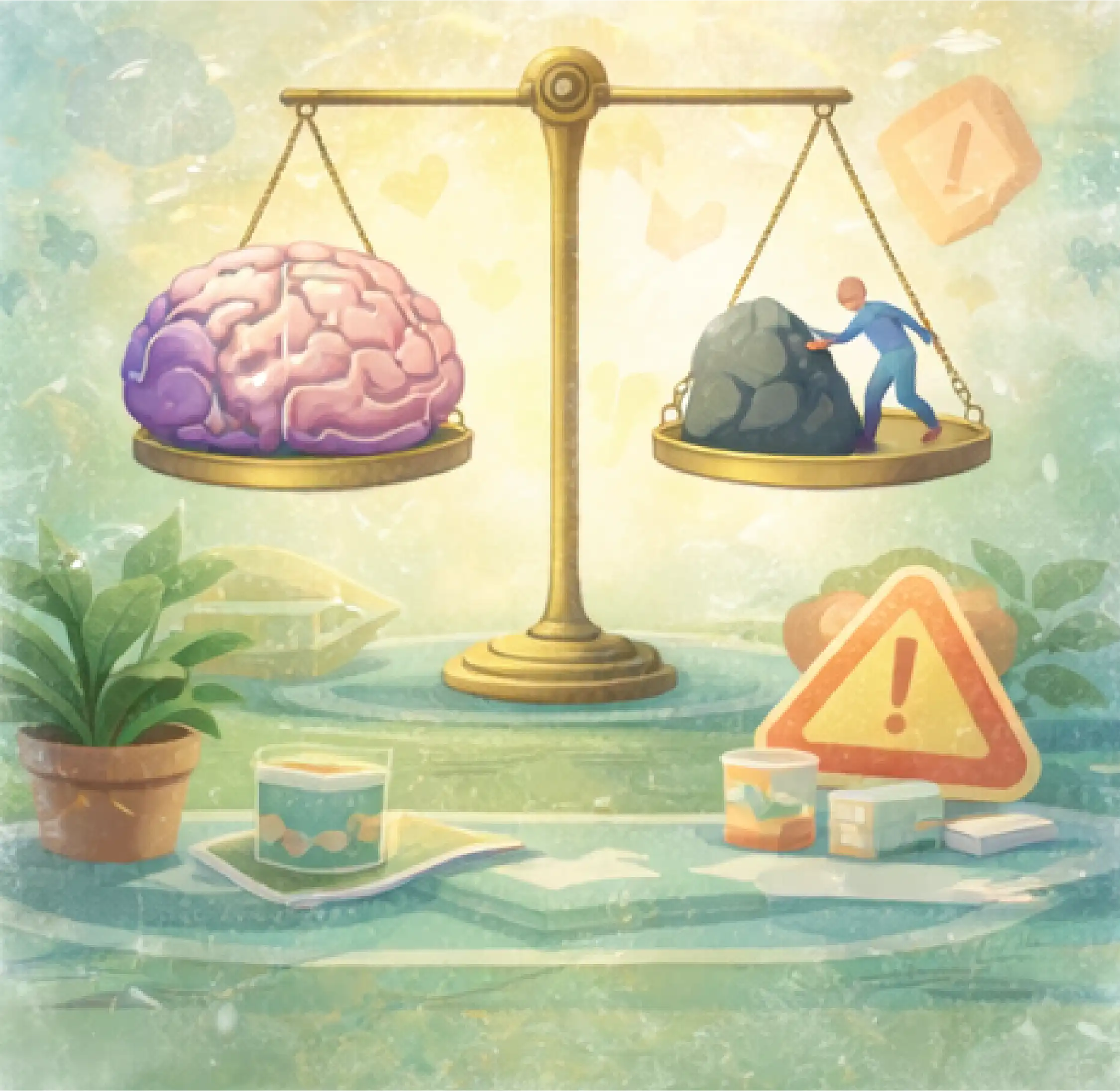

The Mind’s Hidden Habit of Lying to You
Every person believes they think logically, rationally, realistically. But the uncomfortable truth is that the human brain is basically a drama writer with a full-time job. It exaggerates, predicts disasters, personalises neutral events, assumes intentions, jumps to conclusions, catastrophises minor things, and sometimes convinces you that a single mistake means your entire life is collapsing. The mind does not always tell the truth. It tells the version of the truth that matches your fears, insecurities, past experiences, and current emotional state. And the most fascinating part? Most people believe these inner thoughts without question—as if the brain is a courtroom judge rather than an emotional storyteller. This is exactly where cognitive distortions come in. These are habitual thought errors your mind makes automatically, without asking your permission. You don’t choose them; they choose you. And they colour the way you see people, situations, yourself, and even the future. Counsellors know that until these distortions are corrected, almost nothing else changes. Emotional wellbeing, decision-making, confidence, relationships, stress—all of it is influenced by the quality of your thoughts. So the first thing counsellors fix is not your behaviour, not your past, not your relationships… but your thinking patterns.Why Your Thoughts Feel Real Even When They Are Not
The human mind has a unique flaw: whatever it thinks, it feels true. Even if the thought is exaggerated. Even if the thought is inaccurate. Even if the thought is shaped by fear rather than fact. This is because thoughts trigger emotions instantly—long before logic gets a chance to step in. For example:- If you think “I’m failing,” your body reacts with fear.
- If you think “People don’t like me,” you instantly feel anxious or withdrawn.
- If you think “Everything will go wrong,” your chest tightens and stress rises.
The Most Common Thinking Errors Counsellors See (And Fix First)
While every person’s mind is unique, counsellors consistently see the same 10–12 distortions across all ages, backgrounds, and situations. These distortions form the “default setting” of the overwhelmed brain. Let’s explore the ones counsellors address immediately because they create the fastest emotional relief when corrected.1. Catastrophising — The Disaster Imagination Machine
This is when the mind takes a small issue and turns it into a worst-case scenario movie trailer. A minor mistake becomes “my career is over.” A small argument becomes “my relationship is collapsing.” A tense week becomes “my life is falling apart.” Catastrophising makes you live inside imaginary disasters. Counsellors help people replace “What if everything goes wrong?” with “What if it’s just a rough moment?” The emotional relief is instant.2. Overgeneralisation — Turning One Event Into a Life Story
If something bad happens once, the mind assumes it will happen always. One rejection → “Nobody will ever choose me.” One failure → “I always mess up.” One bad day → “My life is terrible.” Counsellors immediately challenge these generalisations because they turn temporary experiences into permanent identities.3. Mind-Reading — Assuming You Know What Others Think
This distortion convinces you that other people are judging you, disappointed in you, talking about you, or noticing your flaws—even when you have zero evidence. Counsellors remind you of the truth: nobody is thinking about you as much as you think about you. People are busy thinking about themselves. This single correction reduces social anxiety dramatically.4. Emotional Reasoning — “I Feel It, So It Must Be True”
This is when emotions become “proof.” “I feel guilty → I must have done something wrong.” “I feel anxious → Something bad must be happening.” “I feel insecure → I must not be good enough.” Counsellors help separate emotions from facts. Feelings are valid, but they are not evidence.5. Personalisation — Taking Responsibility for Everything
Personalisation is the belief that neutral events are secretly your fault. Friend is quiet → “Are they upset with me?” Team member seems tired → “Maybe I did something wrong.” Partner is stressed → “It must be because of me.” Counsellors help people let go of unnecessary guilt and recognise that others have separate emotional worlds.6. Black-and-White Thinking — Life Becomes All or Nothing
People with this distortion see only two extremes: Perfect or failure. Loved or rejected. Success or disaster. Productive or useless. Counsellors help people expand this narrow mental space into more realistic middle ground. Life is not a two-option menu.7. Discounting the Positive — Ignoring Your Wins Completely
This distortion makes people reject compliments, minimise achievements, and focus only on what went wrong. The brain becomes trained to overlook positive feedback. Counsellors reverse this by strengthening internal appreciation and helping people adjust their emotional lens.The Clinical Magic: Why Fixing These Thinking Errors Changes Everything
Cognitive distortions don’t just affect thoughts—they affect emotions, decisions, relationships, and behaviour. Correcting distortions leads to:- reduced anxiety
- improved mood
- better emotional regulation
- healthier relationships
- clearer decisions
- stronger confidence
- more balanced reactions
- less guilt and self-blame
How Counsellors Correct These Distortions (Without You Realising It)
People assume counsellors give advice. But what they actually give is perspective. Through questions, reflections, examples, and scientific techniques, counsellors gently guide your mind to reinterpret situations more realistically. This process includes:- identifying your default distortions
- challenging the accuracy of those thoughts
- separating feelings from facts
- reframing situations from a balanced angle
- reinforcing healthier interpretations
- strengthening rational thinking during emotional moments
Why Most People Don’t Realise They Have Cognitive Distortions
Because distorted thoughts don’t “feel distorted.” They feel true. That’s the trap. And that’s why counsellors are essential—they are an external, unbiased mirror reflecting your thoughts back to you without your emotional colouring. When someone shows you the errors in your thinking, your entire emotional experience begins to shift.If You Recognised Yourself in These Distortions… You’re Human
Every mind has thinking errors. Every mind gets distorted under stress. Every mind needs cognitive correction from time to time. There is nothing wrong with that. But leaving distortions unaddressed affects:- your happiness
- your relationships
- your decisions
- your confidence
- your peace of mind
- your emotional stability