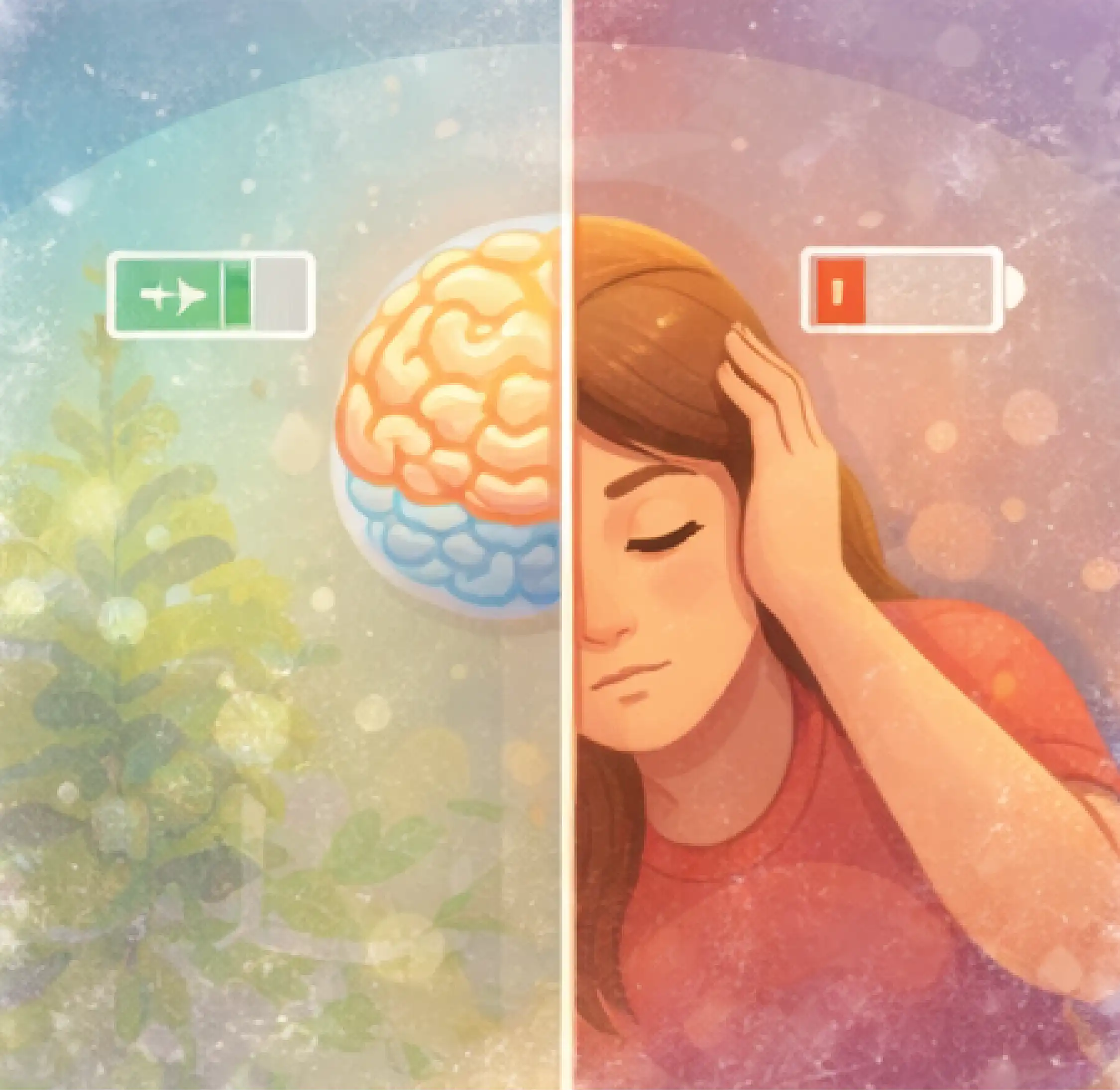

If You’re Exhausted Without Doing Much, It Might Not Be Laziness — It Might Be the Wrong Kind of Fatigue
Have you ever had days where your mind feels heavy, your thoughts feel slow, and your body feels drained — even though you haven’t done anything physically demanding? Or days where you wake up tired despite sleeping well? Or days where a simple decision feels as exhausting as running a marathon? Most people call it “tiredness.” Neuroscience calls it something more specific — brain fatigue or emotional fatigue — two very different states with completely different consequences, causes, and recovery methods. Yet most people (including professionals) confuse the two, mixing them into one fuzzy idea of “mental tiredness.” The truth is, understanding the difference can dramatically improve how you treat yourself, how you work, how you recover, and how counsellors help you heal. Let’s break it down scientifically, with real-life clarity.Why Your Mind Has Two Types of Energy — Not One
Your brain runs two parallel systems:1. The Cognitive System (Thinking Brain)
This handles logic, analysis, planning, decisions, attention, memory, language, and problem-solving.2. The Emotional System (Feeling Brain)
This handles fear, joy, stress, empathy, relationships, triggers, reactions, and emotional processing. Both systems can get exhausted — but in completely different ways. And here’s the twist: You can have a fresh thinking brain but a burnt-out emotional brain. Or the opposite. This is why you can think clearly but feel drained… Or feel emotionally fine but mentally slow. Let’s explore both types of fatigue separately.PART 1 — Brain Fatigue: When Your Thinking System Burns Out
Brain fatigue (also known as cognitive fatigue) comes from overuse of the prefrontal cortex — the part of your brain that makes decisions, solves problems, controls attention, and governs willpower.Common Causes of Brain Fatigue
- constant multitasking
- long hours of studying or office work
- decision-making overload
- intense focus for long periods
- analyzing, planning, strategizing
- digital overstimulation
- working without breaks
- switching tasks repeatedly
- information overload
How Brain Fatigue Feels
- difficulty concentrating
- slow thinking
- forgetfulness
- trouble solving simple problems
- zoning out
- clumsiness in tasks
- feeling mentally dull
- needing coffee just to think
- irritability when interrupted
- poor decision-making
- blank stares at the screen
What Neuroscience Says
Brain fatigue is directly linked to depletion of dopamine and glucose in the prefrontal cortex. You don’t feel sad — you feel foggy.What Brain Fatigue Needs
- rest
- sleep
- hydration
- breaks
- reduced cognitive load
- fewer decisions
- single-tasking
- stepping away from screens
PART 2 — Emotional Fatigue: When Your Feelings Burn Out
Emotional fatigue (or affective fatigue) comes from overuse of the limbic system — the emotional centre of the brain, responsible for stress, fear, empathy, and emotional responses. This is the fatigue counsellors deal with most often.Common Causes of Emotional Fatigue
- constant stress
- worrying too much
- conflict at home or work
- emotional caregiving
- heartbreak or loss
- chronic anxiety
- unresolved trauma
- empathizing with others too much
- emotional suppression
- feeling unappreciated
- trying to “stay strong”
- identity confusion
- relationship problems
How Emotional Fatigue Feels
- everything feels “too much”
- sensitivity to small things
- tears without reason
- irritability
- emotional shutdown
- lack of interest in things you enjoy
- feeling overwhelmed
- numbness instead of sadness
- low self-worth
- hopelessness or helplessness
- social withdrawal
- wanting to be left alone
- the desire to “escape life”
- emotional heaviness
What Neuroscience Says
Emotional fatigue is linked to prolonged cortisol elevation and reduced serotonin activity. Your brain literally gets stuck in survival mode.What Emotional Fatigue Needs
- emotional expression
- counselling / talking
- journaling
- boundary-setting
- reducing emotional load
- connection with safe people
- healing conversations
- empathy and grounding
- time away from emotionally draining demands
Brain Fatigue vs Emotional Fatigue — The Key Differences
| Feature | Brain Fatigue | Emotional Fatigue |
| Cause | Cognitive overload | Emotional overload |
| Area of brain | Prefrontal cortex | Limbic system |
| Feels like | Foggy mind | Heavy heart |
| Symptoms | Slow thinking, low focus | Overwhelm, numbness, irritation |
| Recovery | Rest + sleep + breaks | Emotional processing + support |
| Common in | Students, office workers | Caregivers, stressed teens/adults |
| Main trigger | Information load | Emotional pressure |
| Behavioural signs | Forgetfulness, errors | Withdrawal, sadness, shutdown |
The Hidden Danger: Treating the Wrong Fatigue the Wrong Way
Here’s the biggest problem: People apply the wrong solution to the wrong fatigue.Example 1:
You’re emotionally exhausted → you take a nap → you wake up still tired. Because naps don’t cure emotional wounds.Example 2:
You’re cognitively exhausted → you binge-watch shows → you feel worse. Because screens exhaust your prefrontal cortex more.Example 3:
You’re emotionally drained → someone says “You need a break.” But the brain needs emotional relief, not time off.Example 4:
You’re cognitively overwhelmed → someone says “You should talk to someone.” You don’t need a conversation; you just need a break from thinking. Misdiagnosing fatigue makes recovery slower.How Counselling Helps Identify Which Fatigue You Have
A trained counsellor quickly distinguishes between:- cognitive overload
- emotional overload
- attention fatigue
- burnout
- depression-like symptoms
- stress-induced symptoms
- identity-fatigue
- emotional suppression
- social exhaustion
- “Do you feel blank or heavy?”
- “Do you struggle with tasks or feelings?”
- “Do you avoid thinking or avoid feeling?”
- “Does rest help or not help?”
- “Do you feel foggy or emotional?”
The Science of Why These Two Fatigues Often Occur Together
The thinking and feeling brain constantly interact. When your emotional brain is stressed, it steals resources from your logical brain — reducing focus and memory. When your logical brain is overloaded, it weakens emotional regulation — increasing irritability and anxiety. This is why:- emotional stress makes you forgetful
- cognitive overload makes you snappy
- burnout makes you both foggy and sad
- anxiety makes decision-making difficult
- overthinking drains energy like physical work
How to Recover: A Clear Plan Based on Neuroscience
If You Have Brain Fatigue: Focus on Cognitive Rest
- reduce multitasking
- take micro-breaks
- stop forcing productivity
- do light physical tasks
- hydrate
- take digital pauses
- avoid overstimulation
If You Have Emotional Fatigue: Focus on Emotional Processing
- talk to someone safe
- journal
- cry if needed
- express what hurts
- reduce emotional burdens
- seek counselling
- practice grounding exercises
- take interpersonal breaks
If You Have Both: You Need a Hybrid Strategy
Speed recovery comes from:- reducing thinking load
- reducing emotional load
- building routines
- seeking support
- improving sleep
- limiting digital exposure
- having structured downtime