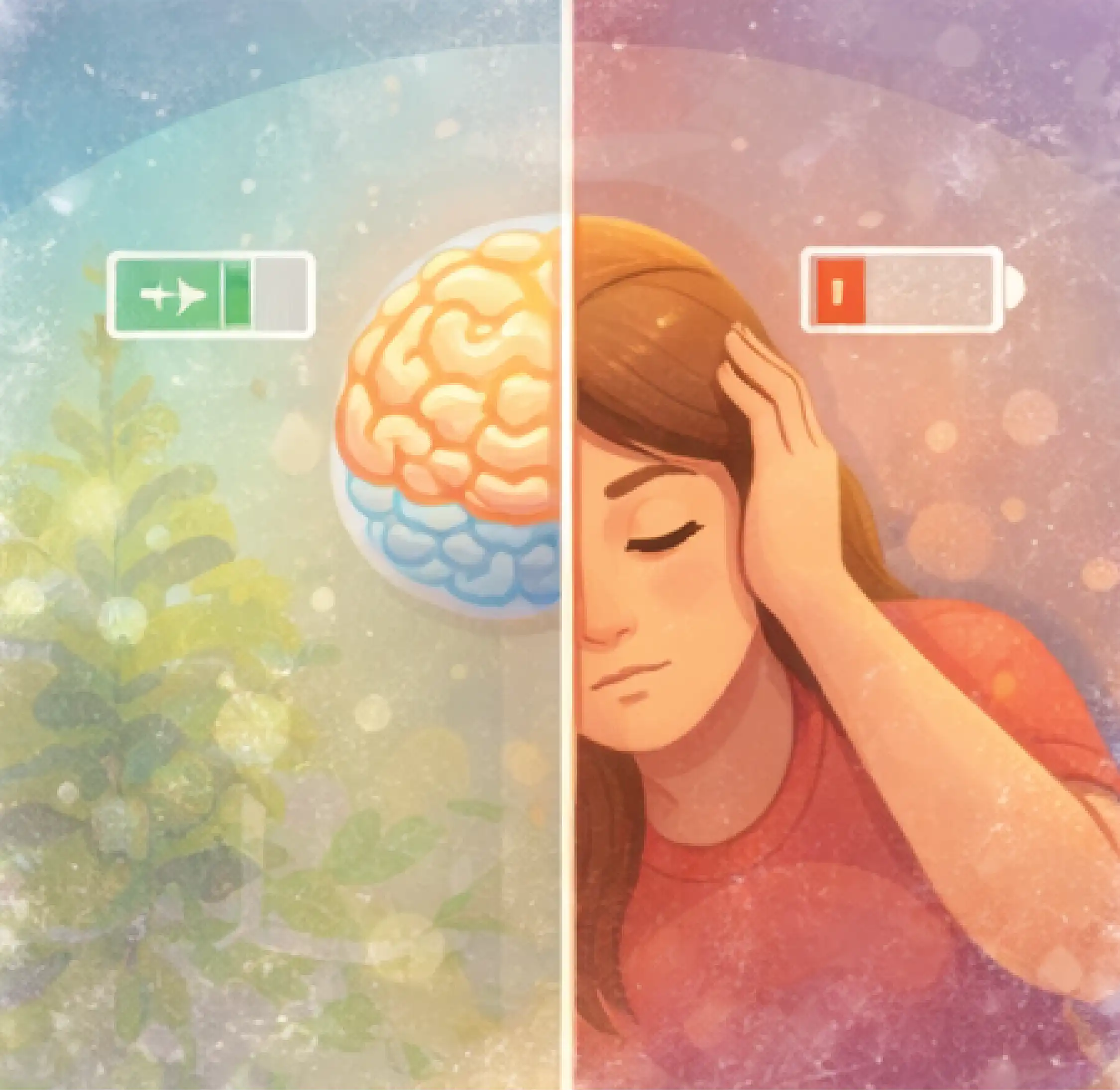

“Why Did I Do That… Again?”
You swore you’d be on time—then left just late enough to hit traffic. You finally ate well for four days—then ordered the exact thing that wrecks your sleep. You got the opportunity you prayed for—then “forgot” to send the final document. It looks irrational from the outside. From the inside, it feels like a fog: I don’t know why I did that. But there is a why. Self-sabotage isn’t random recklessness; it’s the brain running an old safety script that no longer fits your current life. Let’s decode the machinery: how the mind protects you by blocking you, why success can feel like danger, and how counsellors help you break the loop—without turning your life into a motivational bootcamp.Self-Sabotage Is a Safety Strategy (Bad Results, Smart Intent)
At its core, self-sabotage is threat management. Your nervous system predicts that moving toward a goal will trigger pain (rejection, exposure, loss, conflict, responsibility). To avoid that pain, it steers you into behaviours that preserve control: delay, distract, pick a fight, disappear, over-perfect, under-prepare. Short term: relief. Long term: regret. Think of it as a warped seatbelt—tightens during acceleration, keeps you “safe,” prevents you from arriving.Under the Hood: A Brain Built for Protection
Three pieces drive the loop:- Amygdala (Alarm) Detects possible threat (criticism, ambiguity, spotlight) and yells danger. You feel it as flutters, tension, urgency to avoid.
- Prefrontal Cortex (Planner) Handles long-term goals—until the alarm spikes. Under stress, blood flow and attention shift away from planning toward survival. Welcome to react-now mode.
- Habit Systems (Basal Ganglia) Repetition wires responses (scrolling, snacking, stalling, arguing) that reliably lower uncomfortable arousal. The brain loves predictable relief more than uncertain growth.
Why Success Feels Scary (Even When You Begged for It)
- Fear of Exposure: More visibility = more judgment. If your history equates visibility with danger, your body slams the brakes.
- Belonging Tax: Outgrowing your “old circle” threatens attachment. Many people unconsciously choose connection over progress.
- Control Illusion: If you quit, you avoid the pain of being rejected. Self-sabotage preserves pride by pre-losing on your terms.
- Identity Dissonance: A big win clashes with an old self-story (I’m the underdog / caretaker / quiet one). Your nervous system defends the known self.
Common Sabotage Patterns (Spot Your Signature Move)
- Perfectionistic Stall If it can’t be flawless, it won’t be done. Hidden function: avoid judgment by never finishing.
- Chronic Delay Wait until pressure is painful enough to justify a compromised result. Hidden function: if outcome is poor, you can blame time, not talent.
- Drama Detours Start a fight, take on a side crisis, volunteer for extra work—anything to escape the vulnerable task. Hidden function: busyness disguises avoidance.
- Corset Goals Set ten goals at once. Hidden function: ensure overwhelm; confirm “see, I can’t.”
- Reverse Sprint Make a surge of progress, then “treat” yourself in ways that erase it (spending, eating, binging, ghosting). Hidden function: re-establish familiar baseline.
- Handbrake Humour Undercut your wins with jokes. Hidden function: pre-empt envy or expectations.
- Bridge Burning Quit right before the review / launch / commitment. Hidden function: avoid feedback that could rewrite identity.
The Loop in One Line: Cue → Story → State → Behaviour → Relief (→ Repeat)
- Cue: Email from a high-stakes client.
- Story: If I reply, they’ll see I’m not enough.
- State: Heart rate up, jaw tight (alarm).
- Behaviour: Avoid inbox, open socials, start “urgent” cleaning.
- Relief: Anxiety dips.
- Repeat: The brain tags avoidance as effective.
How Counsellors Deconstruct Sabotage (This Is Not Just “Be Disciplined”)
- Functional Analysis (What Problem Is This Solving?) We ask: What pain does the sabotage help you avoid? Shame? Disapproval? Conflict? Spotlight? The behaviour is the answer to a question you didn’t know you asked.
- State First, Then Strategy We stabilise physiology (breath, orienting, brief movement) before skills. You can’t out-think a 140-bpm heart.
- Micro-Exposure to Success Tiny, structured wins that keep arousal tolerable: send one line, publish a draft to one person, present for 90 seconds. The nervous system updates its threat map by doses.
- Identity Work We examine “who I am” beliefs. If your self-story can’t hold the new result, the body will resist the result.
- Relapse Planning Sabotage will attempt a comeback. We pre-write scripts and resets so “I slipped” becomes “I resumed” within hours, not weeks.
Skill Pack: Tools That Make Sabotage Lose Its Job
A) Physiological Reset (60–120 seconds)
- Exhale-weighted breathing: 4 in, 6–8 out × 8 cycles.
- Physiological sigh: Inhale, quick top-up inhale, long exhale—3–5 reps.
- Orienting: Turn head slowly, scan the room; name five colours. These lower alarm so planning can return.
B) One-Square Action
Shrink task size until resistance drops below 3/10 on an “ugh” scale. Examples:- Open the doc and write the title only.
- Send one clarifying question instead of the full proposal.
- Draft two bullet points, not the deck.
C) If–Then Plans (Implementation Intentions)
Preload decisions where you usually wobble:- If it’s 9:30, then I open the slide deck for 10 minutes.
- If I feel the urge to check socials, then I stand and drink water first.
- If I miss my morning block, then I do a 10-minute “good enough” block at 4 pm.
D) Friction Engineering
Make sabotage hard, approach easy.- Put the most important doc on your desktop; bury distracting apps in a folder three swipes deep.
- Use site blockers with a 10-minute unlock delay (time dissolves impulse).
- Layout “first step” materials the night before (open canvas, named file).
E) Permissioned Imperfection
Set “Minimum Viable Effort” (MVE) thresholds: Draft = ugly, 200 words, 20 minutes max. Excellence belongs later in the funnel; at the start it’s a wall.F) Success Acclimatisation
Practice receiving: a compliment, a small payment, a published post—without deflecting. Say “thank you” and breathe for 10 seconds. You’re training your system that good can be safe.Case Snapshot (Composite, Anonymised)
Arjun, 32, product manager: misses promo cycles despite strong metrics. Pattern: perfection → delay → last-minute sprint → decent result + crushed sleep → “not leadership ready” feedback → repeat. Work:- Identify core fear: exposure to cross-functional judgment.
- Install 15-minute MVE blocks with exhale breathing start.
- Ship ugly drafts to a peer by 11 am twice a week (micro-exposure).
- Build a success acclimatisation ritual post-submission (walk + one self-ack line).
- Pre-write relapse script: “I slipped into polish. I’m resuming draft mode now.”
Identity: The Quiet Engine of Sabotage
If your identity = “reliable behind-the-scenes,” public credit triggers guilt. If your identity = “caretaker,” prioritising your project feels like betrayal. We aren’t just changing habits; we’re expanding who it’s allowed to be you. Try writing a bridge identity:- I’m someone who ships early drafts.
- I’m a caring person who also protects focus blocks.
- I’m a thoughtful finisher, even when it’s not perfect.
Seven Red Flags That Sabotage Is Driving (Not “Lack of Discipline”)
- Progress spikes are followed by “treats” that erase gains.
- A single mistake triggers full project abandonment.
- You choose urgent, visible tasks over important, quiet ones.
- Compliments make you want to hide.
- You escalate small conflicts right before milestones.
- You often get sick around deadlines (body opts out).
- You keep “starting over Monday.”
A 7-Day Anti-Sabotage Sprint (Doable & Data-Backed)
Day 1 — Map the Loop (10 min). Write one sabotaging scenario using the Cue→Story→State→Behaviour→Relief chain. Circle the story. Day 2 — Lower the State (5 min x 2). Do exhale-weighted breathing before one task you normally avoid. Note resistance before/after (0–10). Day 3 — One-Square Action (15 min). Pick a goal. Define the laughably small next step. Do only that. Stop. Leave a breadcrumb. Day 4 — If–Then Install (5 min). Write three implementation intentions for your prime wobble times. Day 5 — Friction Tune (15 min). Block two sites for work hours. Put the live doc on the desktop. Move phone across the room. Day 6 — Success Rehearsal (3 min). Ask a safe person for micro-feedback. Receive it with one breath and “thank you.” No self-deprecation. Day 7 — Relapse Script (5 min). Write the exact words you’ll use post-slip: “I paused. Now I’ll do 10 minutes and leave a breadcrumb.” Rehearse out loud once. Repeat the sprint weekly for a month. Small levers, big trajectory.For Leaders & Parents: Don’t Accidentally Train Sabotage
- Praise early drafts and iteration, not just polished finales.
- Normalize micro-miss + quick repair (“Thanks for resuming fast”).
- Reward boundaries (“Good call moving the deadline instead of ghosting”).
- Ask for one imperfect update mid-way; reduce the fear of exposure.
When to Bring Therapy In
- Sabotage is tied to panic, shutdown, bingeing, or self-harm thoughts.
- Visibility triggers body memories (shaking, dissociation).
- Family/cultural scripts make success feel like betrayal.
- You “know what to do” but can’t start without crashing.