
The Hidden Map Inside Your Mind
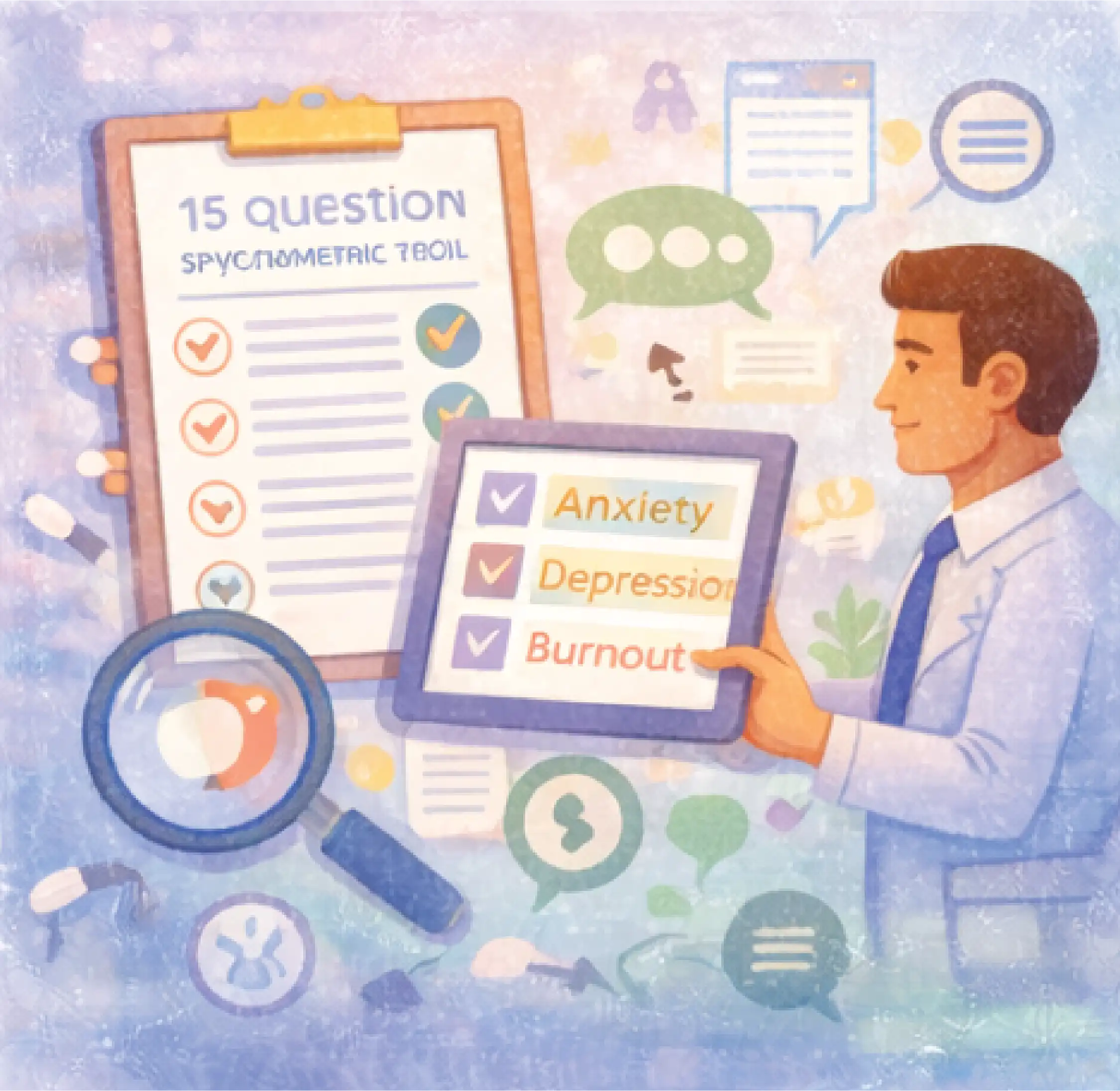
If someone told you that a simple 15-question assessment could reveal how you think, react, feel, cope, and behave in real life, your first instinct might be disbelief. After all, we’re complex beings. Our personalities are shaped by years of experiences, habits, opinions, emotions, trauma, culture, and conditioning. How can something so brief understand something so deep? But here’s the twist: Your behaviour isn’t random. Your thoughts aren’t random. Your triggers aren’t random. Your emotional reactions aren’t random. Your coping style isn’t random. Everything follows a pattern—even when you don’t realise it. And psychometric screening is designed specifically to measure these invisible patterns with remarkable accuracy. In many ways, psychometric tools function like a mental GPS—they identify where you currently stand emotionally, how you got there, and where your mind tends to go under pressure. The surprising part is not that these tools work; it’s that they work so well using such few questions.The Power of Efficiency: Why It Only Takes 15 Questions
Fifteen questions may sound too few to measure behaviour, but consider this: medical professionals can detect anemia from a single drop of blood. A cardiologist can estimate heart function from one ECG line. A skilled psychologist can understand someone’s attachment style in the first five minutes of conversation. Good science doesn’t need quantity; it needs precision. Each question in a psychometric tool is built like a laser—sharp, targeted, and designed to measure a specific cognitive or emotional marker, such as:- How you respond to stress
- How you manage uncertainty
- How you handle conflict
- How you cope with emotional discomfort
- How you regulate thoughts
- How easily your mood fluctuates
- How much overload your brain is experiencing
- How consistent or inconsistent your behaviour is
- How dependent you are on external validation
- How digitally overstimulated you are
- How resilient you are in difficult situations
The Science Behind the Screens: What Psychometrics Actually Measure
Psychometric tools are not personality quizzes created for entertainment. They are built using:- Behavioural psychology
- Cognitive science
- Neuropsychology
- Emotional intelligence research
- Clinical studies
- WHO-aligned frameworks
- Large data sets
- Standardised scoring models
Why Behaviour Follows Patterns (Even When It Feels Chaotic)
If you’ve ever wondered why you react strongly to certain situations but feel numb in others, why some people drain you while others energise you, or why you sometimes overthink but occasionally avoid everything completely—there’s a pattern behind it. For example:- People who score high on emotional overwhelm tend to shut down during conflicts.
- People with low cognitive flexibility repeat the same thoughts when anxious.
- People with high digital overstimulation struggle with sleep and focus.
- People with low emotional regulation experience mood swings and irritability.
- People with high perfectionism markers procrastinate more than others.
- People with strong avoidance indicators escape difficult conversations.
The Art of Reading Between the Lines
You’re not just clicking answers. You’re revealing:- How fast your brain processes emotional information
- Whether you lean toward problem-solving or avoidance
- What your dominant thought style is
- Where your emotional stamina currently stands
- What triggers you and why
- Whether you internalise or externalise stress
- How much cognitive load you’re carrying
- Whether your digital habits are affecting your mind
- How adaptive or rigid you are under pressure
Real-Life Examples: How 15 Questions Reveal So Much
Imagine three people answering the same screening tool. A corporate professional scoring high on agitation and low on coping indicates early burnout—even when he insists he’s “fine.” A teenager scoring high on emotional withdrawal but normal on mood suggests social anxiety, not depression—as parents often misassume. A parent scoring high on irritability but low on sadness indicates emotional exhaustion, not depression—important for deciding support. In each case, the behaviour looks similar: tiredness, withdrawal, irritability. But the origin is completely different. Psychometric screening detects the origin.The Magic of Patterns: Small Questions, Big Clarity
One of the greatest strengths of these tools is their ability to predict how you will behave in real situations. For example:- If your score shows difficulty in cognitive shifting, you may struggle with change.
- If your emotional reactivity score is high, you’re more likely to feel overwhelmed quickly.
- If your digital fatigue score is high, your attention span might be shrinking.
- If your resilience score is low, you may avoid difficult tasks.
- If your self-regulation score is low, you may react impulsively.
Why Platforms Like Mr. Psyc Use These Tools First
Most people want solutions immediately. But real solutions come only after accurate understanding. That’s why Mr. Psyc begins every journey with screening. Not to label you. Not to categorise you. But to personalise your treatment path. Your screening score helps determine:- Whether you need counselling
- Whether you need behaviour-change guidance
- Whether digital detox is essential
- Whether psychiatric support might be needed
- Whether you’re in early-risk or moderate-risk zones
- Which counsellor type fits your profile best
- What emotional patterns need attention first