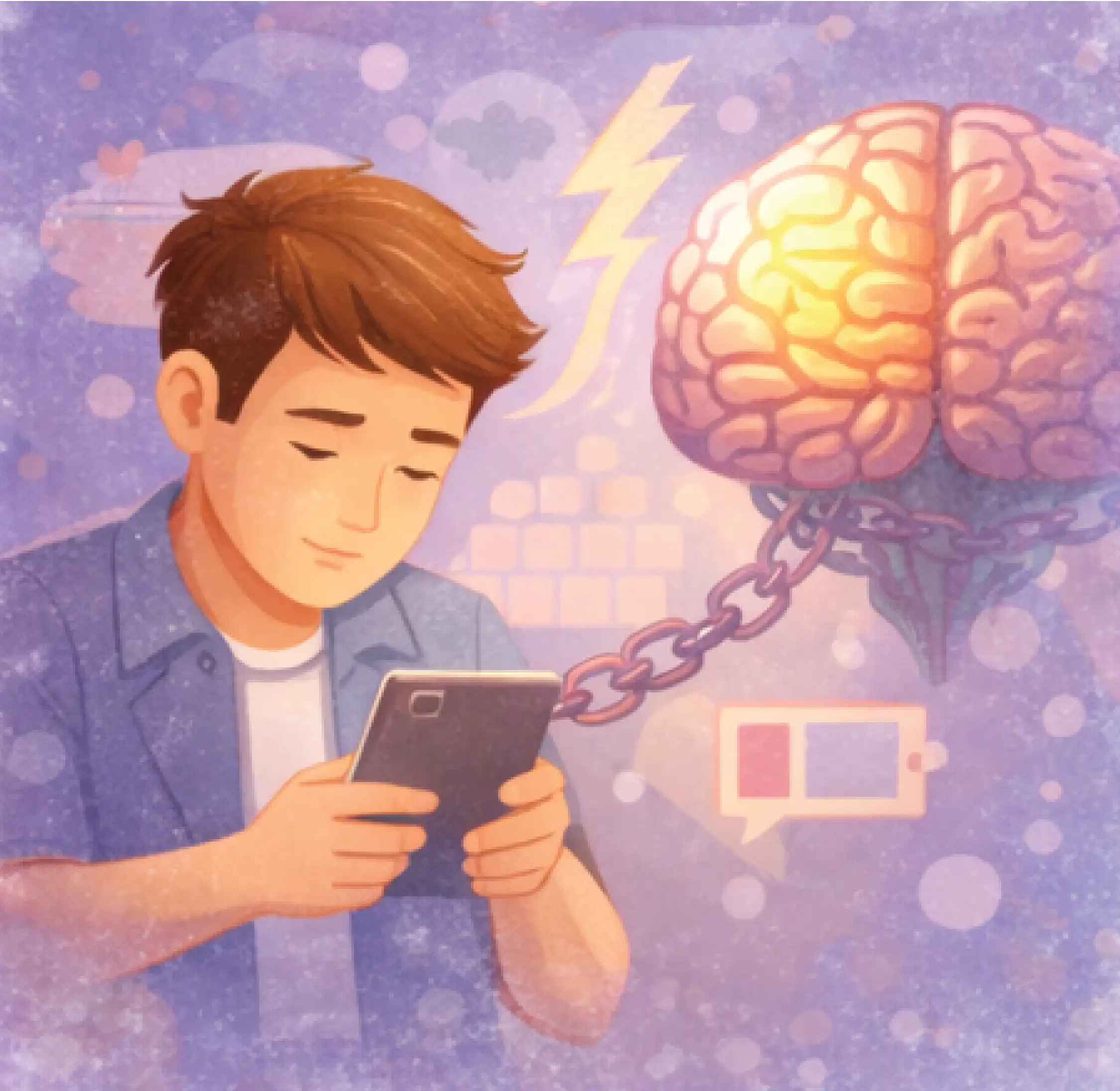
“Just Switch Off Your Phone” — Sounds Easy, Right?
Until you actually try it. Suddenly, silence feels like stress. You itch to check that notification. You open one app. Then another. Then… you realise it’s been 40 minutes. Why is it so hard to just disconnect? The answer isn’t willpower. It’s wiring. And that’s exactly why real digital detox can’t just be a weekend break — it has to be a scientifically structured behaviour plan. This is where counsellors step in, and Mr. Psyc’s system leads the way.Why the Brain Gets Addicted to Screens in the First Place
Let’s be clear: You’re not weak. Your brain is reward-trained. Every swipe, tap, like, or scroll activates a dopamine spike — the “pleasure chemical” that signals reward. Over time, your brain starts associating:- boredom → check phone
- anxiety → open social app
- low energy → scroll videos
- loneliness → DM someone or refresh the feed
What a “Scientific Detox Plan” Actually Means
At Mr. Psyc, digital detox isn’t about shame or digital guilt. It’s about reprogramming reward loops. A detox plan built by counsellors follows five core scientific steps:1. Psychometric Screening of Digital Behaviour
We assess:- Screen time triggers (emotional, situational, social)
- Addiction risk levels
- Impulse response strength
- Attention span markers
- Mood-screen correlation
2. Behaviour Mapping
When do you pick up your phone? Is it after a fight? Before sleep? During a boring meeting? We map:- The pattern
- The emotion behind the pattern
- The alternative response your brain is craving
3. Trigger Substitution
You can’t remove a reward without replacing it. We design replacement actions:- Instead of doomscrolling → 3-minute sensory reset
- Instead of app refresh → short breathwork or movement burst
- Instead of screen wake-up → journaling or daylight exposure
4. Counselling-Based Support for Relapse
Yes, you’ll relapse. The key is not punishment, but understanding what triggered the return. Counsellors help decode:- Was it loneliness?
- Was it mental exhaustion?
- Was it social validation craving?
5. Micro-Wins System
This is the game-changer. The detox is broken into daily micro-victories (like a reward quest): Went 30 mins without the phone → win Sat with boredom for 2 mins → win Replaced late-night scrolling with music → win Why? Because your brain still wants rewards — we just change where it gets them.Common Detox Mistakes People Make (and Why They Fail)
Cold Turkey Approach: Throwing the phone away and hoping for the best leads to withdrawal symptoms — anxiety, boredom, irritability. The brain doesn’t rewire overnight. Guilt-Driven Detoxes: “I’m addicted! I need to stop!” Shame creates resistance, not change. No Replacement Strategy: Removing tech without filling the emotional gap leads to quick rebounds. Social Pressure Detoxes: Doing it because it’s a trend (“No Screen Sundays”) without internal commitment rarely sustains. The only detox that works long-term is the one that’s tailored to your mind’s unique design.What a Counsellor Sees That You Might Miss
When we work with users on detox plans, we don’t just look at screen usage — we look at:- Mood volatility
- Sleep quality
- Relationship friction
- Work/productivity patterns
- Emotional suppression signs
- The avoidance
- The exhaustion
- The overstimulation
- The unmet emotional needs
Digital Addiction vs Digital Dependence: Know the Difference
Digital Dependence = Functional reliance (e.g. using devices for work, navigation, learning) Digital Addiction = Compulsive use despite negative impact (e.g. sleep issues, emotional shutdown, procrastination) If you find yourself:- Losing time without realising it
- Constantly needing a “dopamine top-up”
- Getting restless when not using your phone
- Struggling with sleep or anxiety due to screen exposure