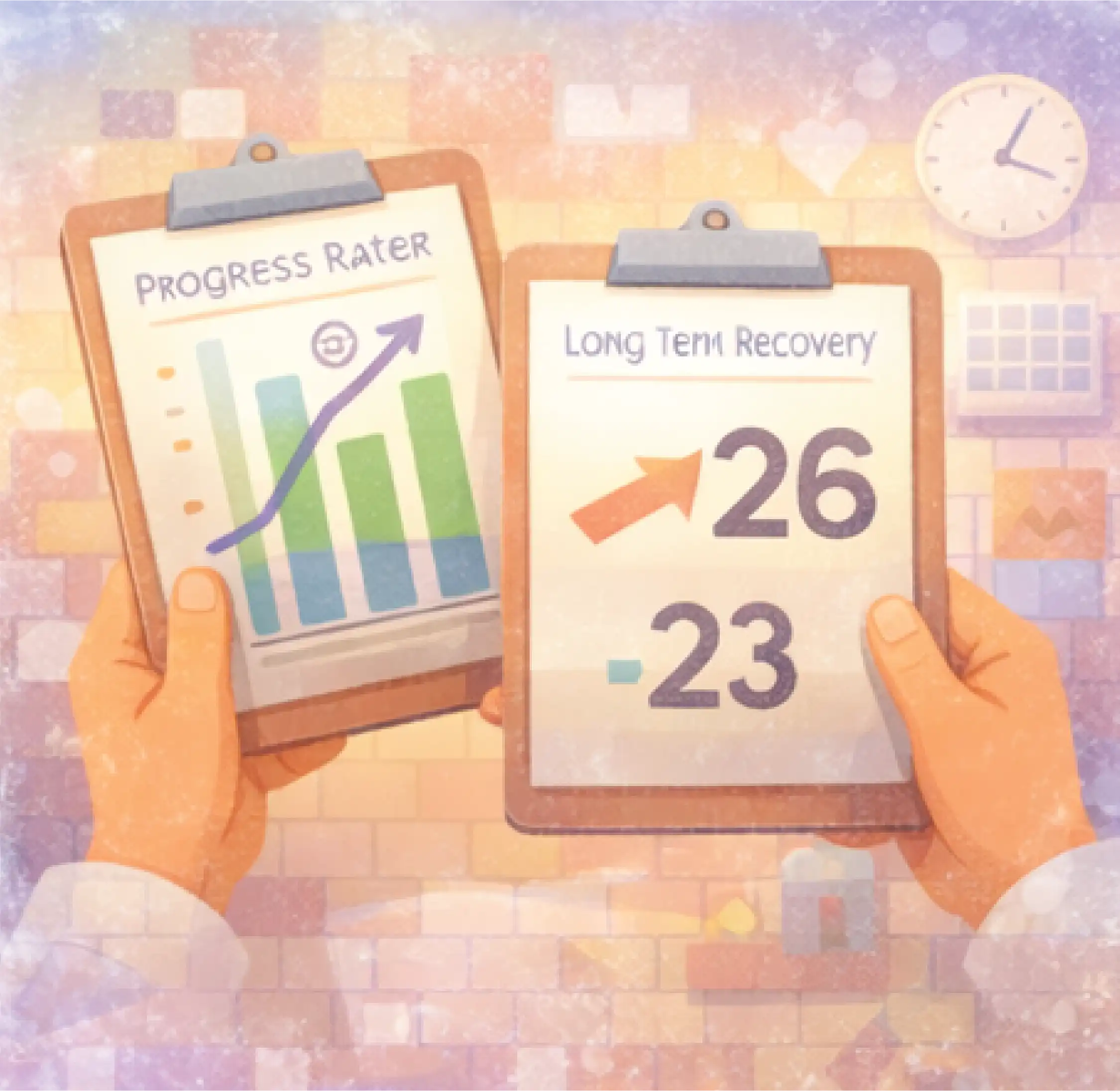

What If You Could See Recovery Coming — Before You Feel It?
You’re in therapy. You’re showing up. You’re journaling (somewhat). You even cried in session two. But weeks pass… and that lingering doubt creeps in: “Am I really getting better — or just getting better at pretending?” Now imagine your counsellor opens a dashboard and says: “Your self-regulation scores are up. Coping behaviour frequency has doubled. Your emotional recovery index is trending 19% upward since Week 3. You’re not just coping — you’re transforming.” Welcome to the power of progress tracking in therapy. It’s not just about “how you feel” — it’s about what your data says about your future recovery.Why Traditional Therapy Misses the Long-Term Picture
Most traditional therapy models focus on:- Emotional expression
- Catharsis and venting
- Insight and realisation
- Weekly feel-good or feel-worse check-ins
What Exactly Is a Progress Tracker in Therapy?
A progress tracker is not just a scorecard. It’s a behavioural mirror, a psychological map, and a recovery predictor — all rolled into one. At Mr. Psyc, our progress tracker system includes:- Symptom shift logs
- Behavioural compliance records (sleep, journaling, self-care habits)
- Emotional response variance over weeks
- Session quality markers
- Crisis response metrics
- Relapse-risk scoring models
The Brain Heals in Loops, Not Lines
Therapy isn’t linear. Nobody walks in broken and walks out “fixed.” The brain learns in loops — with:- Emotional peaks and dips
- Resistance, realisation, relapse
- Micro-wins followed by old patterns
- Moments of clarity and confusion
4 Core Indicators That Predict Long-Term Recovery
Here’s what counsellors and systems look for:1. Consistency Over Intensity
Did the client journal 3 times a week for 6 weeks? Did they report stress but still show up for sessions? Recovery is built on consistency, not occasional “aha!” moments. The tracker values persistence as a predictive metric.2. Crisis Response Score
When emotional storms hit, did the client:- Spiral into withdrawal?
- Use learned tools like grounding or journaling?
- Reach out instead of shutting down?
3. Behavioural Substitution Patterns
Has unhealthy behaviour (isolation, bingeing, impulsive responses) reduced? Even if emotional distress still exists, the ability to choose differently is a key recovery marker. The tracker compares emotional triggers vs actual behaviour — and scores the gap reduction.4. Resilience Lag Time
The time it takes for someone to bounce back from:- An argument
- A panic episode
- A mood drop
- A trauma reminder
Why This Helps Therapists (And Clients Too)
For the therapist:
- Spot early stagnation
- Predict risk zones
- Customise plans
- Prove impact with hard data
For the client:
- Feel emotionally safe
- See their own growth visually
- Stay motivated when emotions lie
- Recover with clarity, not confusion
What Progress Tracking Looks Like at Mr. Psyc
We don’t just ask: “How are you feeling this week?” We ask:- How often did you use your coping tools?
- What was your anxiety reactivity window this week?
- Did your negative thoughts decrease in frequency or intensity?
- Are your sleep patterns stabilising?
- What’s your updated Recovery Forecast Score?
The Science Behind It All
Numerous studies support the use of tracking and feedback in therapy: Clients who get session-by-session feedback drop out 50% less often Measured therapy clients are twice as likely to improve Feedback-based models improve counsellor accuracy and adjustment In short: when we track, we treat better.Real Progress, Real People
A 19-year-old student struggling with anxiety couldn’t feel improvement. But the tracker showed:- Panic duration had reduced from 20 minutes to 6 minutes
- Night-time heart rate stabilised
- Missed assignments dropped 60%
- Increased social activity
- Re-established sleep routines
- Emotional triggers reduced in frequency
- First signs of joy return