Individual Care · Sleep & Stress Support
Gentle, structured support to handle racing thoughts, night-time wakeups, and daytime stress—without extreme rules.

Sleep Pattern Audit
Understand when you take the longest to fall asleep, wake up, or feel most tired.
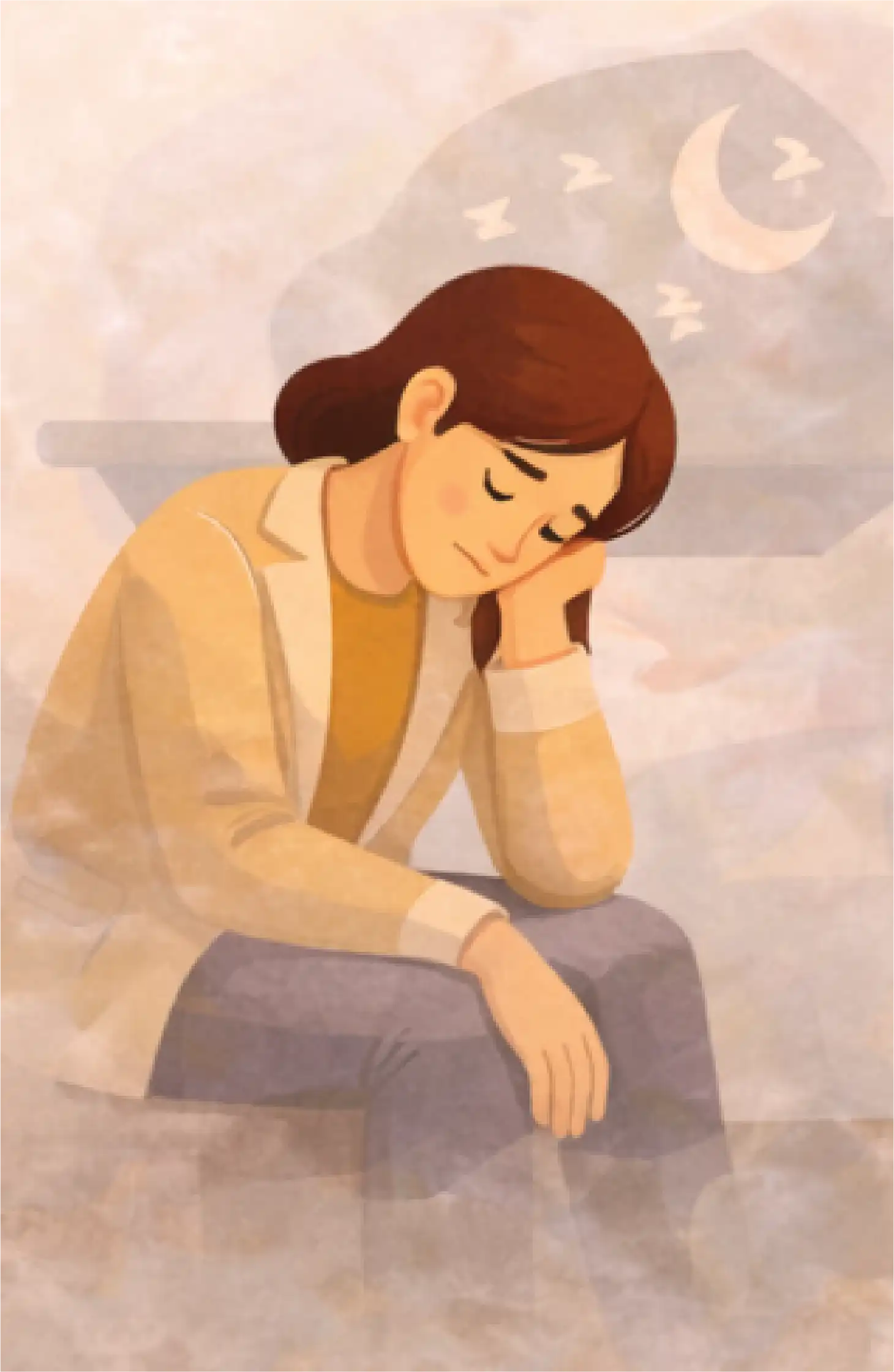
Stress Trigger Map
Identify stressors, thought loops, and body signals that keep your system on high alert.

Calming Routine Plan
Build realistic night and day routines for better sleep and calmer stress—not perfection.


Evidence Snapshot
These are awareness-focused insights, not a diagnosis. They simply show why structured sleep and stress support can change daily life.
Sleep troubles are common
Stress fuels poor sleep
A difficult cycle
Focus and mood suffer
Body health is affected
Structured routines help
Built for Students. Working Adults. Parents.
This is not a “sleep hygiene checklist” thrown at you. It is a calm, stepwise plan for people whose minds are busy, bodies are tense, and days are already full.





Self-check
Hard to fall asleep
Waking at 3–4 am
Tired but wired
Body tension
Small things feel huge
Focus slips through the day
What You Get
From assessment to night routines and daytime stress tools—you get a complete, stepwise system instead of random tips.
Structured sleep & stress assessment
Sleep & stress trigger map
Night routine design
Daytime stress toolkit
Calm-down protocol
Relapse & flare-up plan
Your Progress Roadmap
Change starts from small, repeatable steps—not perfect days. This roadmap keeps the plan realistic, trackable, and gentle.
Screen
Start with a guided sleep and stress assessment.
Map
Clarify your patterns: timing, triggers, body signals, and supports.
Reset
Introduce tiny changes in night routine, screens, and daytime breaks.
Build
Add stress tools, healthy habits, and meaningful wind-down rituals.
Maintain
Track sleep quality and stress levels, and use the flare-up plan as needed.
Quick Stats
Most people first notice subtle changes: falling asleep a little faster, fewer night-time wakeups, less snapping at loved ones. This program is designed for sustainable progress, not instant fixes.
80%
Sleep Quality
Goal: deeper, more consistent rest
75%
Daytime Calm
Goal: fewer spikes, more steady focus

Free screening
Personal plan
Weekly tracking
Worksheets pack
Optional counselling
Confidential support

Start free
No one-size-fits-all
Science-informed
Body + mind
Measurable progress
Relapse-aware design
Human guidance
Ask Mr. Psyc
The program is designed for people who struggle with sleep, stress, or both. We look at how your sleep and stress influence each other and build a plan that addresses both together.
No. Instead of extreme rules, we work with realistic boundaries and gradual changes—such as soft cut-off times, calmer content, or replacement habits that fit your life.
Everyone is different, but many people notice early shifts—slightly easier sleep or less intense stress spikes—within 2–4 weeks when they follow the plan consistently.
No. This is not an emergency or crisis service. If you have severe sleep issues, medical conditions, or mental health concerns, medical and psychiatric care remain important. This program can support and complement that care, not replace it.
Yes. Your information is handled with confidentiality and consent-first care. Any recommendation to bring in family or medical support is always discussed with you first.
Trusted by users
Most people are not looking for “perfect sleep”—they just want fewer restless nights and less stress in the day. That is what this program is built for.

I used to lie awake for hours. The plan felt simple enough to follow even when I was tired. Within a few weeks, sleep became less of a daily fight.

Kriti S.
The stress tools were practical. Small changes at work and at night made a bigger difference than I expected.
Rohan P.
The flare-up steps helped the most. When things got busy again, I knew how to reset instead of going back to zero.
Ananya G.
For the first time in months, I woke up feeling actually rested. Not perfect, but clearly better.
Sanjay T.