
You Don’t Repeat Bad Habits Because You’re Weak — You Repeat Them Because They Work (For Your Brain)
Everyone has a behaviour they desperately want to change: overthinking, procrastinating, emotional eating, snapping at loved ones, doomscrolling, binge-watching, overworking, avoiding responsibilities, or getting stuck in toxic cycles. People often say, “I don’t know why I keep doing this. I know it’s bad, yet I can’t stop.” This frustration makes people believe they lack discipline or strength. But neuroscience says something entirely different: You repeat your negative behaviour because your brain believes it is helping you survive. Your brain isn’t loyal to your goals. It is loyal to your comfort. And habits — even the destructive ones — provide emotional comfort, psychological familiarity, predictable outcomes, or instant relief. That makes them irresistible. This is why counsellors focus not on the behaviour itself, but on the habit loop hidden underneath. Once you understand how this loop works, you see your patterns with compassion instead of guilt — and with structure instead of confusion.What Exactly Is a Habit Loop? (And Why You Get Stuck in It)
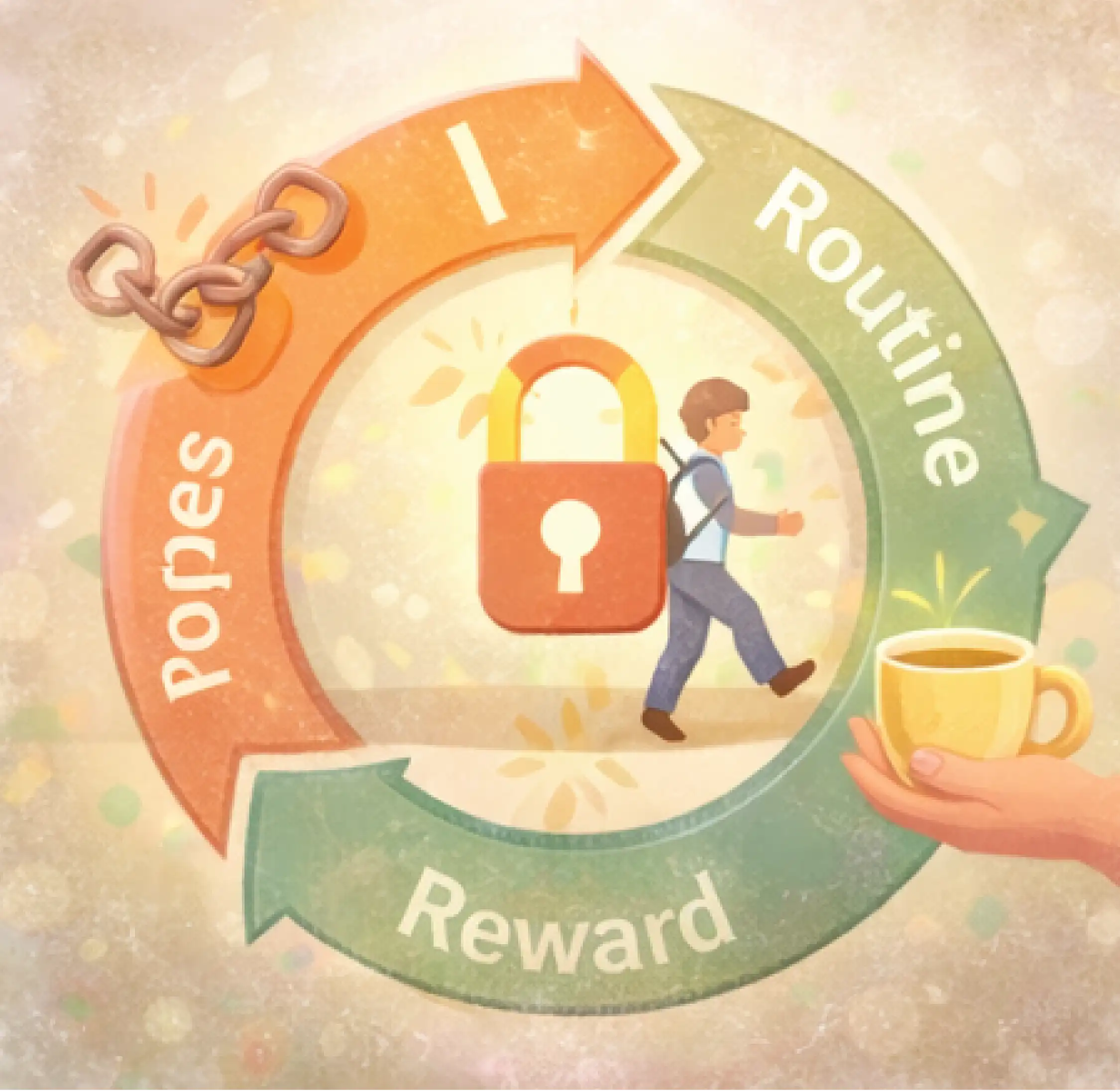
Every repeated behaviour — from brushing teeth to late-night scrolling — follows a predictable loop:Cue → Craving → Response → Reward
This loop becomes automatic over time. You don’t think; your brain simply repeats it. Let’s break it down.1. Cue
This is the trigger that starts the loop. Examples:- seeing your phone
- feeling bored
- experiencing stress
- getting criticised
- entering a certain environment
- thinking a painful thought
- feeling lonely
2. Craving
This is the emotional desire behind the habit — the real motivator. For example:- craving relief from stress
- craving distraction from discomfort
- craving dopamine
- craving connection
- craving escape
- craving comfort
- craving numbness
3. Response
This is the behaviour itself:- scrolling
- overthinking
- eating junk
- avoiding tasks
- lying
- procrastinating
- arguing
- withdrawing
- binge-watching
- checking notifications
4. Reward
This is why the behaviour continues. It gives:- temporary relief
- distraction
- pleasure
- escape
- numbness
- avoidance of discomfort
- sense of control
- emotional quietness
Why Negative Habits Feel Automatic: The Brain’s “Efficiency Mode”
Your brain loves saving energy. When it finds a behaviour that solves an emotional problem quickly, it stores it as a shortcut. Example: Feel stressed → open Instagram → feel better for a moment → repeat Feel lonely → start gaming → distraction → repeat Feel anxious → avoid the task → relief → repeat Feel rejected → overthink → feel temporary control → repeat Your brain isn’t trying to hurt you — it’s trying to protect you by automating relief. The problem? Temporary relief becomes long-term damage. Over time, the shortcut becomes the default. The habit becomes a script. The script becomes a cycle. The cycle becomes your identity. This is why behaviour change is so hard — you’re fighting a survival mechanism, not a choice. Counsellors understand this and use science to rewrite these loops.Why You Can’t Break Negative Habits With Motivation Alone
Motivation is a spark. Habits are wiring. Wiring always wins. Every January, millions decide to “change habits,” yet 92% fail because:- habits live in the subconscious
- motivation lives in the conscious
- habits are automatic
- motivation is temporary
- habits reduce emotional pain
- motivation increases discomfort
- habits provide instant reward
- motivation offers delayed reward
How Counsellors Identify the Habit Loop Behind Your Behaviour
A trained counsellor looks past your outward behaviour and asks:- “What emotion triggered this?”
- “What relief did the behaviour give you?”
- “What do you avoid by doing this?”
- “What reward does the brain get?”
- “What belief sits behind the behaviour?”
- “How does this loop repeat across situations?”
- “Who taught you this coping style?”
- “What cues trigger you most?”
Where Do Negative Habit Loops Come From? (The Emotional Origins)
Most negative loops are not random — they are created during emotionally intense moments, including:1. Childhood conditioning
Example: If you were scolded for mistakes, you grow into an adult who avoids tasks or overthinks decisions.2. Emotional wounds
You adopt habits to protect yourself from pain — like withdrawing to avoid vulnerability.3. Trauma responses
The brain creates “quick exit routes” — like avoidance, escape, shutdown.4. Chronic stress
Stress rewires the brain toward shortcuts that soothe discomfort.5. Unmet emotional needs
Screens, food, entertainment, or reassurance become substitutes for emotional connection.6. Repeated behavioural reinforcement
If something gives relief once, the brain repeats it. Negative habits are not flaws — they are coping mechanisms that overstayed their purpose.How Counselling Breaks Negative Habit Loops Scientifically
Counselling doesn’t shame you for your habits. It helps you understand, interrupt, and replace them with healthier loops. Here’s how.Step 1: Identifying the Cue
The counsellor helps you recognise:- emotional triggers
- environmental triggers
- relational triggers
- thought triggers
- sensory triggers
Step 2: Understanding the Craving Behind the Behaviour
The craving is the emotional need the habit fulfills. For example:- Procrastination = craving relief from fear
- Overthinking = craving control
- Binge-watching = craving escape
- Emotional eating = craving comfort
- Gaming = craving achievement
- Scrolling = craving stimulation
- Withdrawing = craving safety
Step 3: Interrupting the Response
This is where behaviour change truly begins. A counsellor helps you build:- grounding exercises
- breathing patterns
- mindful pauses
- cognitive reframing
- micro-habits
- emotional regulation skills
- replacement responses
- healthier coping routines
Step 4: Replacing the Reward With a Healthier One
You can’t remove a habit without replacing the reward. Example replacements:- instead of doomscrolling → short walk + dopamine
- instead of emotional eating → journaling + relief
- instead of avoidance → 2-minute start rule + confidence
- instead of overthinking → cognitive reframing + clarity
- instead of withdrawing → controlled expression + connection
Step 5: Rewiring the Loop Through Repetition
Repetition is where neuroplasticity kicks in. When a healthier loop is repeated enough times:- the old neural pathway weakens
- the new pathway strengthens
- the habit becomes easier
- emotional triggers become manageable
- the brain stops defaulting to anxiety
- behaviour becomes aligned with your goals
Why Long-Term Change Feels Slow (But It’s Working)
Every time you use a new behaviour instead of an old one, the brain records it. But it needs consistency. Just like learning a language, driving, or playing an instrument, behaviour change requires practice — not perfection. Even setbacks help learning: each time the old habit returns, you become more aware of its cue and craving. Counsellors guide you through this with:- patience
- emotional safety
- consistent feedback
- psychological tools
- cognitive techniques
- reflection exercises
- accountability