
“He’s Just Gaming Again…” But What If He’s Actually Escaping?
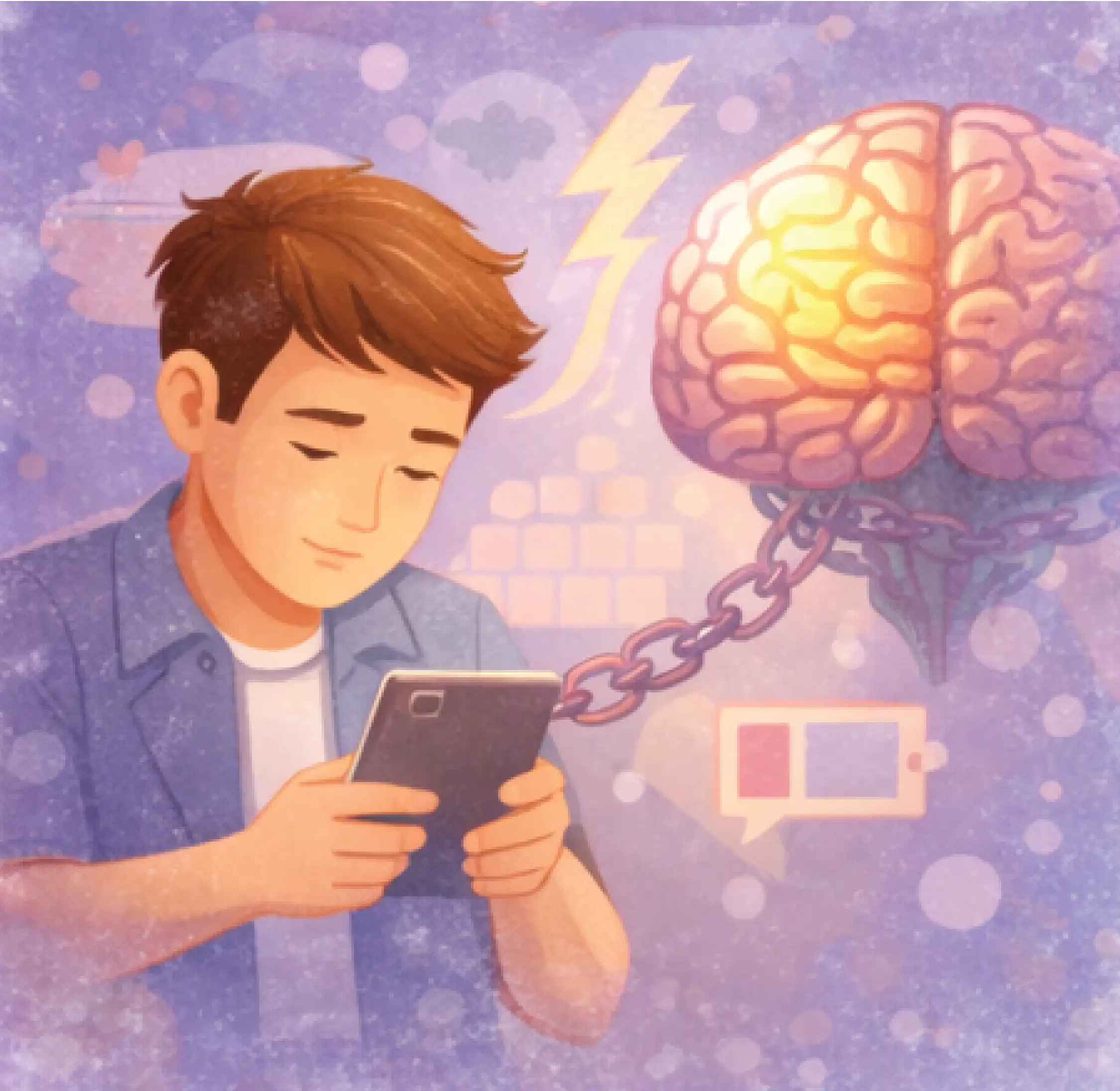
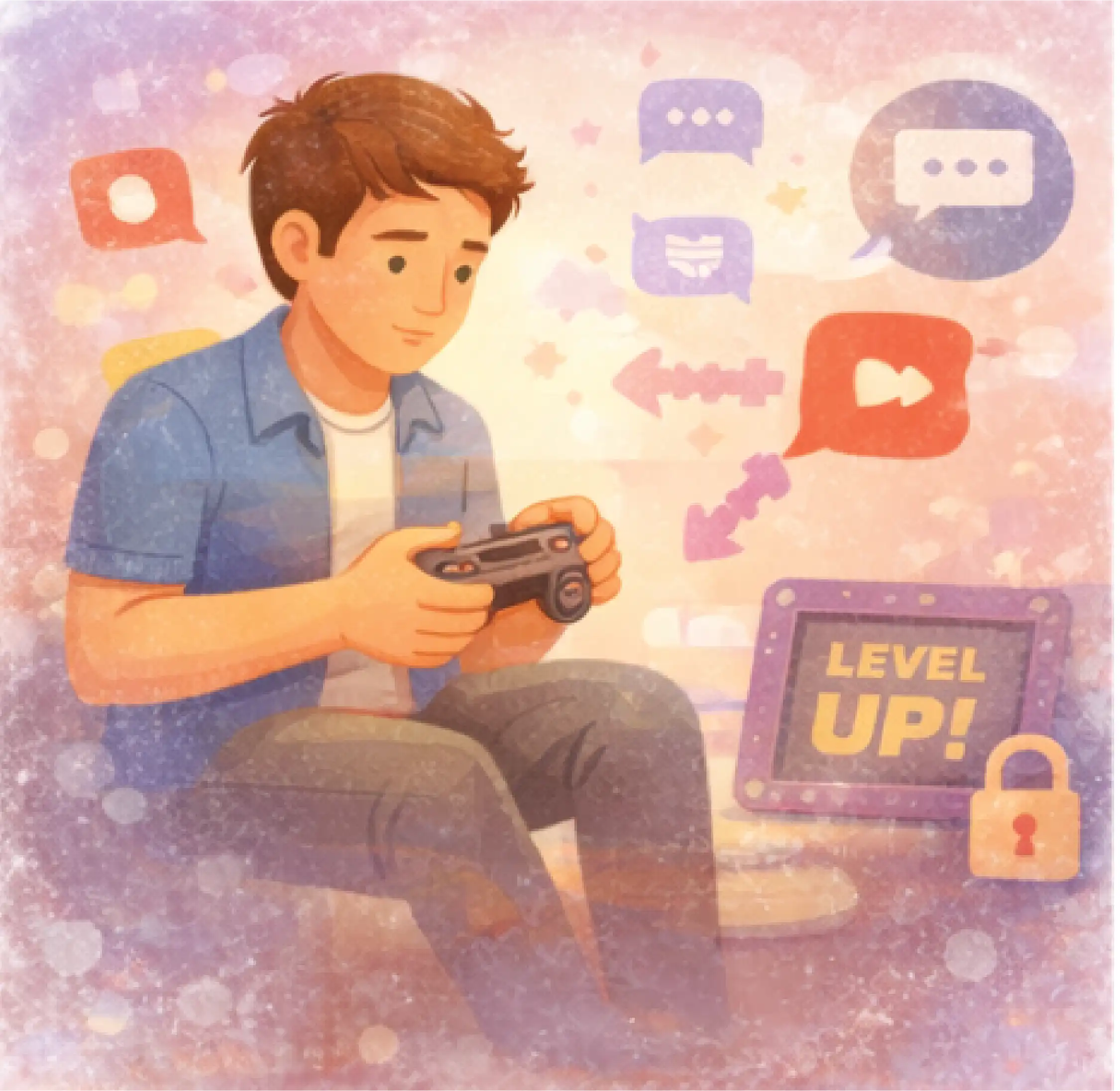
You tell your teen to pause the game. He snaps: “5 more minutes!” You walk away… but deep inside, you’re not annoyed — you’re worried. Why does this game have such a grip on him? Why does it seem like he lives more in the game than in the world? What if the game isn’t just a game? What if it’s a coping system for emotions, identity, or unmet needs your child doesn’t know how to name? Let’s decode what’s really going on in the teen brain addicted to gaming — and how Mr. Psyc’s behavioural trigger map helps make sense of it.Gaming Addiction Is Not Laziness. It’s Behavioural Entrapment.
It’s easy to call it a “bad habit” or “just discipline issue.” But gaming addiction in teens is a complex behavioural cycle driven by:- Psychological rewards
- Emotional escapes
- Neurochemical reinforcement (dopamine, adrenaline, serotonin)
- Real-world deficits being filled virtually (confidence, social belonging, achievement)
Here’s What Gaming Gives — That Real Life Often Doesn’t
- Clear Wins: Progress is instant. Feedback is immediate. No ambiguity.
- Control: Unlike school or home, they call the shots. They’re powerful here.
- Identity: In-game avatars give them an alternate version of self — heroic, admired, untouchable.
- Social Belonging: Multiplayer platforms allow them to connect, team up, and matter to someone.
- Escape: From bullying, performance pressure, or even emotional neglect.
The Trigger Map: How It Starts, Builds, and Becomes a Pattern
At Mr. Psyc, we break down gaming addiction into a Trigger–Behaviour–Reward loop, specific to teen psychology:Trigger #1: Emotional Discomfort
Examples: Loneliness, boredom, anxiety after school, criticism from parent → Response: Play for distraction → Reward: Mood temporarily lifts; emotional pain numbedTrigger #2: Achievement Deprivation
Examples: Poor academic results, low self-esteem, comparison → Response: Enter game world where progress is visible and fast → Reward: Confidence spike, control regainedTrigger #3: Social Rejection / Isolation
Examples: Friend issues, bullying, introversion → Response: Connect online; build in-game social circle → Reward: Social validation, belongingTrigger #4: Parental Pressure or Control
Examples: Strict rules, arguments, emotional disconnection → Response: Retreat into game (which can’t emotionally scold or reject) → Reward: Autonomy, emotional safetyTrigger #5: Sensory Seeking or ADHD
Examples: Need for high-stimulation environments, restlessness → Response: Hyperactive gaming with constant novelty → Reward: Sensory satisfaction, mental engagement This loop is self-reinforcing. Every reward strengthens the brain’s association with gaming as the go-to solution for life’s discomfort.What Makes Gaming Different From Other Screen Addictions
Unlike passive digital habits like scrolling, gaming is interactive. It activates multiple systems:- Cognitive (planning, strategising)
- Emotional (winning, losing, bonding)
- Physiological (adrenaline surges, fight-or-flight states)
- Social (competition, chatrooms, e-sports tribes)
How Parents Misread the Signals — With Good Intentions
Common responses like:- “Stop wasting your time.”
- “You’ll ruin your life.”
- “Why can’t you just control yourself?”
The Screening Angle: What Mr. Psyc’s Assessment Tools Look For
Our 15-minute psychometric screening identifies:- Trigger clusters (emotional, social, sensory)
- Dopamine-reward sensitivity
- Sleep–mood–gaming correlations
- Level of compulsion vs choice
- Emotional vocabulary & regulation gaps